Flood insurance in Marion County, Florida
By K2 Insurance · September 1, 2026 · 4 min read
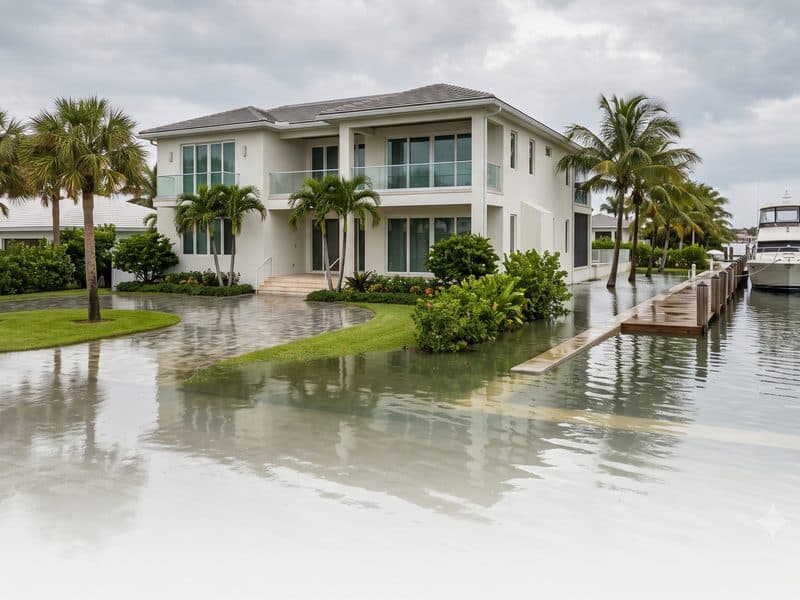
Ask most people in Ocala whether they need flood insurance and you will get some version of the same answer: we are an hour from the coast. It is a reasonable thing to think. It is also the single most common reason inland Florida households end up paying for water damage out of pocket.
No homeowners policy sold in Florida pays for water that rises from the ground. Not limited, not subject to a higher deductible. Excluded. If water comes up from the ground rather than down through the roof, a standard policy is generally not the thing that responds. That holds in Marion County exactly as it does in Monroe.
Inland does not mean dry
Storm surge is a coastal problem. Rainfall is not.
Marion County sits in the middle of a peninsula that regularly takes on many inches of rain in a single afternoon during the summer, and tropical systems that have long since stopped being newsworthy on the coast can still sit over the interior and dump water for a day. Surge needs an ocean. A stalled storm needs nothing but time.
The county's geology adds a second path. This is karst country, which is why the springs are here at all. Water moves through limestone rather than simply running off, and ground that absorbs water beautifully in an ordinary week can stop absorbing it once it is saturated. The Withlacoochee, the Ocklawaha and the smaller creeks that feed them rise on their own schedule, sometimes days after the rain that caused it, which is a genuinely strange thing to watch happen on a sunny afternoon.
None of that shows up in a conversation about hurricanes. It shows up in a conversation about drainage.
What your FEMA zone actually tells you
Flood zones are the first thing a lender looks at and the last word on very little else.
If a property sits in a high-risk zone, a mortgage lender will generally require flood coverage as a condition of the loan. That much is straightforward. What surprises people is the reverse: a property outside a high-risk zone is not a property without flood risk. It is a property where nobody is forcing the question. Plenty of Florida flood claims over the years have come from addresses their owners understood to be low risk, because zone maps describe probability across an area rather than what happens to one house on one bad afternoon.
Zones also move. Maps get updated, development changes how water drains, and a parcel that was mapped one way a decade ago may be mapped differently now. It is worth knowing which zone yours is in today rather than which one it was in when you bought.
The coverage is its own policy, and it has its own rules
A flood policy is bought separately, whether through the National Flood Insurance Program or one of the private markets that now compete with it. Two features are worth understanding before you need them.
The first is that the structure and the contents are usually handled as separate limits. A policy written to protect the building may do nothing for what is inside it unless contents coverage is included, and for a finished lower level in particular the treatment can be narrower than owners expect. This is a question to ask directly rather than assume.
The second is timing. NFIP policies generally do not take effect for thirty days after purchase, so the time to arrange it is a quiet week in spring, not the morning a storm gets a name. Private flood options can sometimes bind faster, but planning around a shorter wait is planning around an exception.
What any given policy covers, and what it excludes, depends on the terms of that specific policy. Two quotes at a similar price can behave very differently on the day a claim is filed.
A few practical things
Look up your flood zone before you do anything else, so the conversation starts from fact rather than memory. If your property has an elevation certificate, find it, because elevation documentation can affect pricing. Ask what a policy would and would not do for your particular situation, and ask a licensed agent rather than a search engine, since the answer turns on your address and your building.
And price it even if nobody is requiring it. Inland flood coverage is often considerably less expensive than coastal coverage, for the same reason the risk feels theoretical: fewer claims, lower exposure. Knowing the number costs nothing.
How K2 fits in
K2 Insurance is independent, so no single carrier decides what a Marion County property gets shown. We quote the NFIP and the private flood markets in one pass and hand you both sets of numbers, along with a plain explanation of where they differ. If you would rather talk it through than fill anything in, reach us here, or read more about flood coverage and the rest of what we write across Marion County.
This article is general information, not insurance or legal advice. Coverage, limits and exclusions depend on the terms of your individual policy.
Want this reviewed for your situation?
Our local team will compare options from 40+ rated carriers — free, no pressure.